

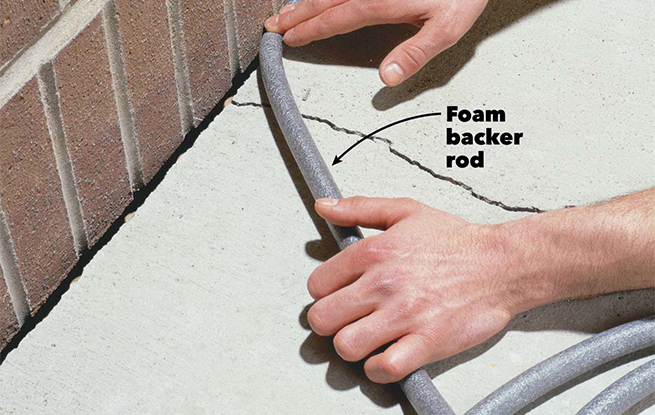
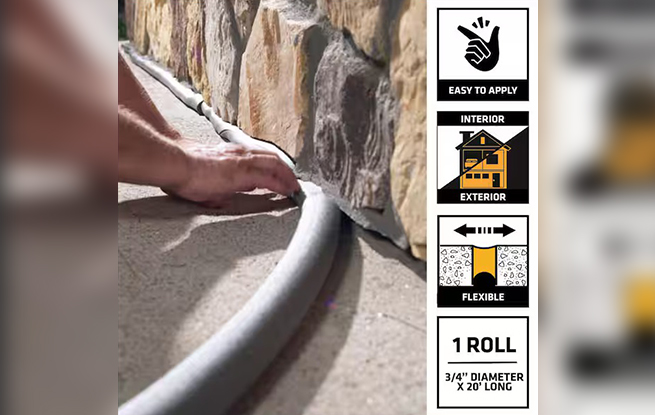
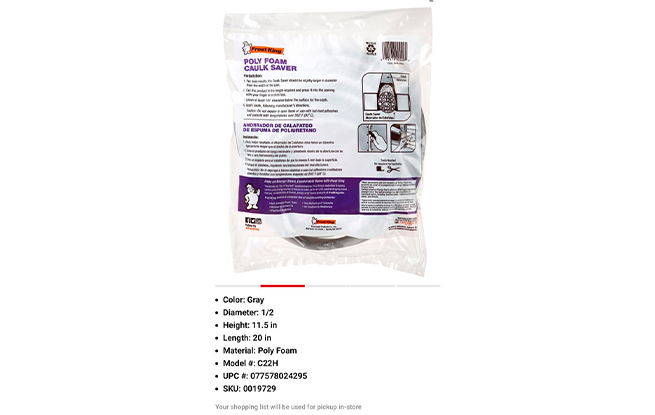
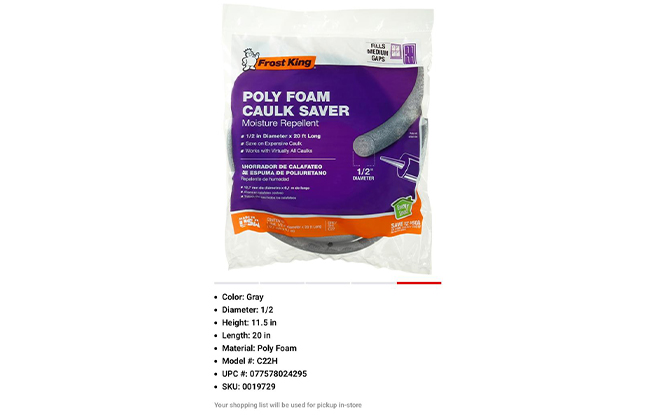
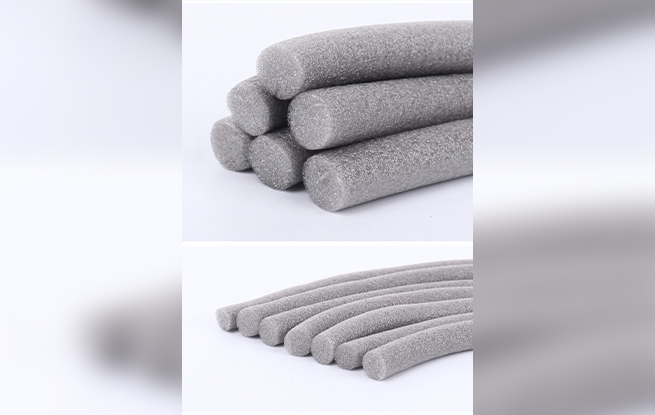
Poly foam caulk saver, also known as a backer rod, is a flexible, cylindrical foam material primarily used as a backup in construction joints to control sealant depth, reduce caulk consumption, and improve the sealant's elasticity and durability.
Composition and Properties
- Material: It is typically made from closed-cell polyethylene (PE) foam or EPDM rubber, which is low-density and resilient. Some variants may be open-cell polyurethane (PU) foam, or a bi-cellular blend.
- Water Resistance: The closed-cell design makes it non-absorbent and water-resistant, ideal for applications exposed to moisture. Open-cell foam, however, can absorb water and is primarily recommended for indoor use.
- Flexibility: The material is soft, flexible, and compressible, allowing it to be bent and twisted to fit snugly into various cracks and joint shapes.
- Insulation: : It offers strong thermal and sound insulation properties, helping to block the transfer of heat, cold air, or outside noise through cracks and gaps.
- Chemically Inert: Most backer rods are chemically inert and will resist oil, gasoline, and many solvents, and will not stain or adhere to sealant materials.
Composition and Properties
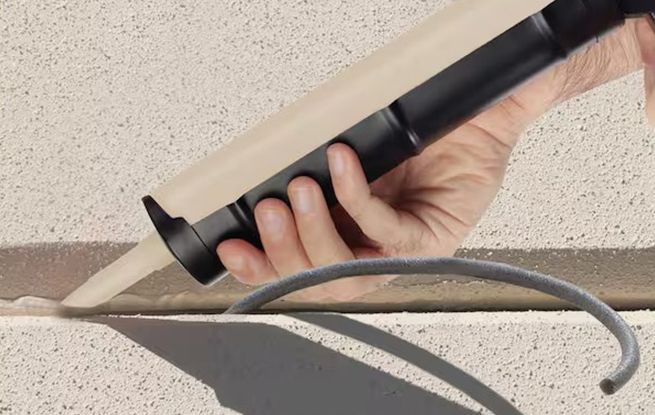
- Sealant Backing: The primary function is to provide a firm, non-stick foundation for the caulk or sealant, ensuring it only adheres to the sides of the joint (two-sided adhesion). This prevents the sealant from tearing when the joint expands or contracts due to temperature changes or structural movement.
- Caulk Saving: By filling a large portion of the gap, the backer rod significantly reduces the amount of expensive caulk or sealant needed to complete the job.
- Versatile Use: It is suitable for a wide range of applications, including:
- Expansion joints in concrete (driveways, sidewalks, pavements).
- Sealing gaps around window and door frames.
- Filling cracks in walls and foundations.
- Use in log construction, glazing installations, and precast concrete assemblies.
Installation
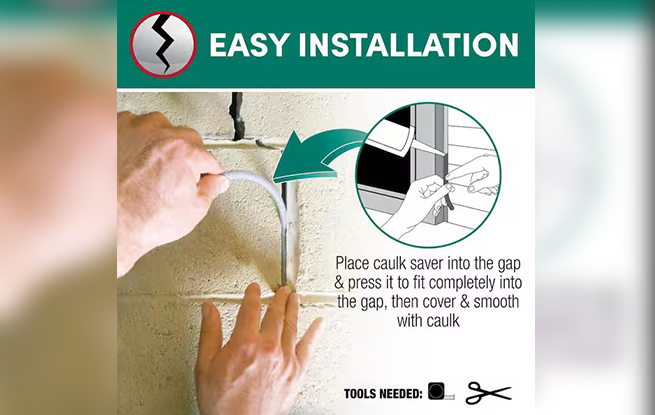
Installation is simple: the appropriately sized backer rod (which should be slightly larger than the gap for a snug fit) is cut to the desired length and pressed into the gap using a blunt tool, such as a carpenter pencil, to the correct depth before applying the sealant. This provides a neat, professional surface for the caulking project.
Available Types and Sizes Backer rods come in a wide range of diameters, typically from 1/8 inch up to several inches, to accommodate various joint widths. They are available in different forms:
- Open-cell: More flexible and allows air/moisture to pass, aiding sealant cure, but absorbs water.
- Closed-cell: Non-absorbent and water-resistant, best for wet areas and most cold-applied sealants.
- Bi-cellular: A blend offering compressibility with a moisture-resistant outer skin, great for irregular joints and preventing sealant bubbling.